
Short answer: a practicing physician can go from idea to published book in 6 to 12 months without taking a single day off from clinic. The path works in this order: position the book first (one reader, one promise), extract the manuscript through structured sessions that fit around your schedule, then hand editing, publishing, and launch to a team while you keep 100% of your rights and royalties. Writing was never really the hard part for busy doctors. Finding a sequence that survives a real calendar is.
Key takeaways
- Structured extraction happens in short, scheduled sessions, not a sabbatical or a blank page at midnight.
- Patient stories get published as de-identified composites, the same discipline you already apply at the bedside.
- Positioning first (one reader, one promise) is what keeps a physician's book from sounding like every other one on the shelf.
- Hospital policy, employment agreements, and your specialty board's rules deserve the same upfront check as HIPAA.
- The book usually isn't the income. It's the credential that opens the room where the income happens.
Where does the time actually come from?
Not from a sabbatical, and not from your weekends either, if the process is built correctly. Structured extraction means short, scheduled sessions where you talk through what you already know, the same way you’d walk a resident through a case. Someone else turns that into a manuscript. You’re not staring at a blank page at 11 p.m. after a full day of patients.
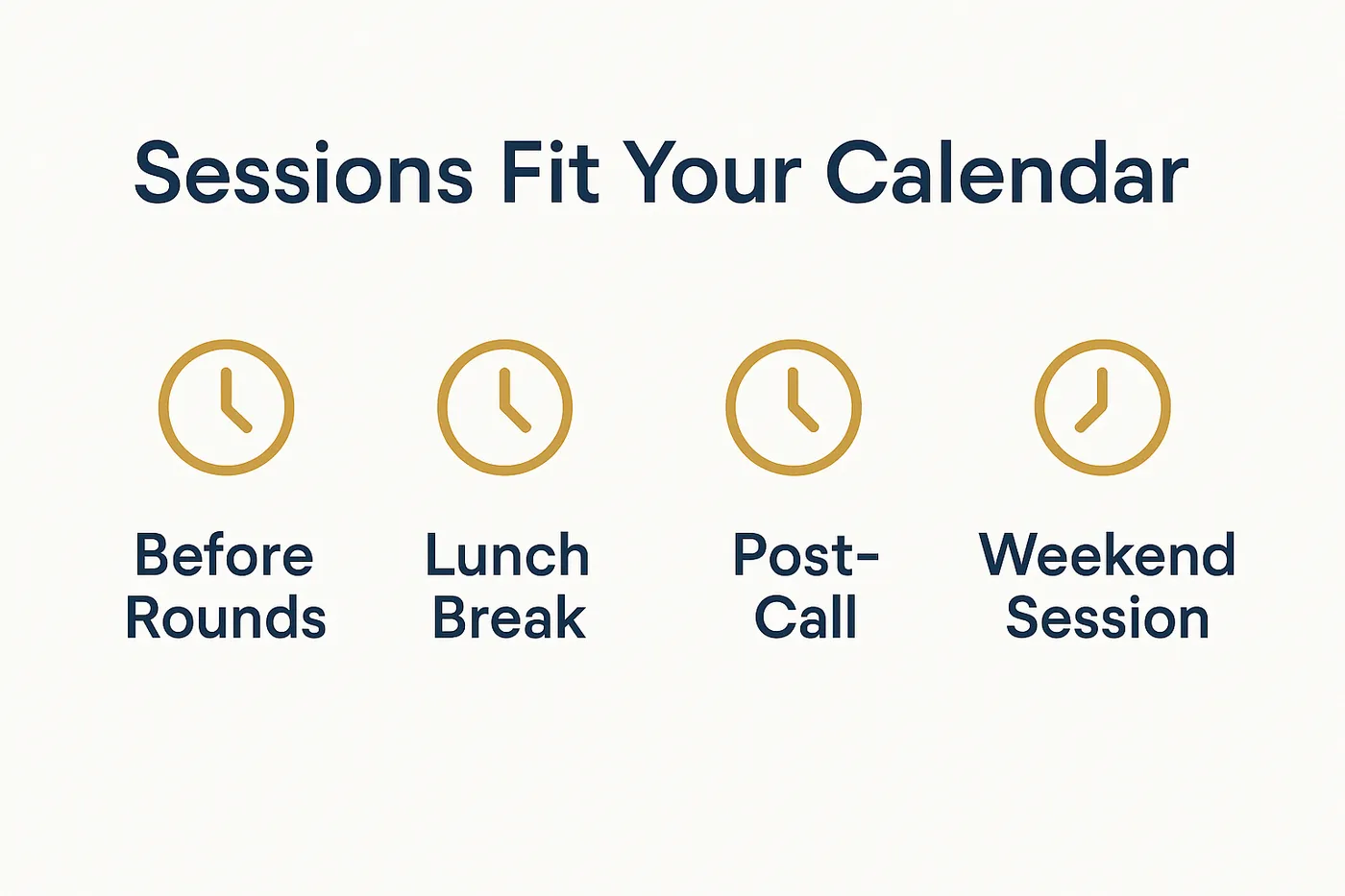
The actual scheduling looks less like a writing retreat and more like fitting in one more short appointment a week. Some physician-authors prefer a slot before rounds start, when the day hasn’t filled up yet. Others use a lunch break between clinic blocks, or the quieter hour right after a call shift ends, when the day’s cases are still fresh enough to talk through easily. A weekend morning session works for physicians whose weekday schedule genuinely has no gaps. None of these require blocking out a full day, which is exactly why the process fits around a real clinical schedule instead of competing with it.
One nurse of 53 years came to us with 25 years of knowledge and no idea how to start. The structure was the cure, not more free time.
What happens to patient stories and privacy under HIPAA?
Everything gets abstracted or composited the same way you’d present a case at grand rounds. No patient is identifiable, and that standard applies to more than just removing a name.

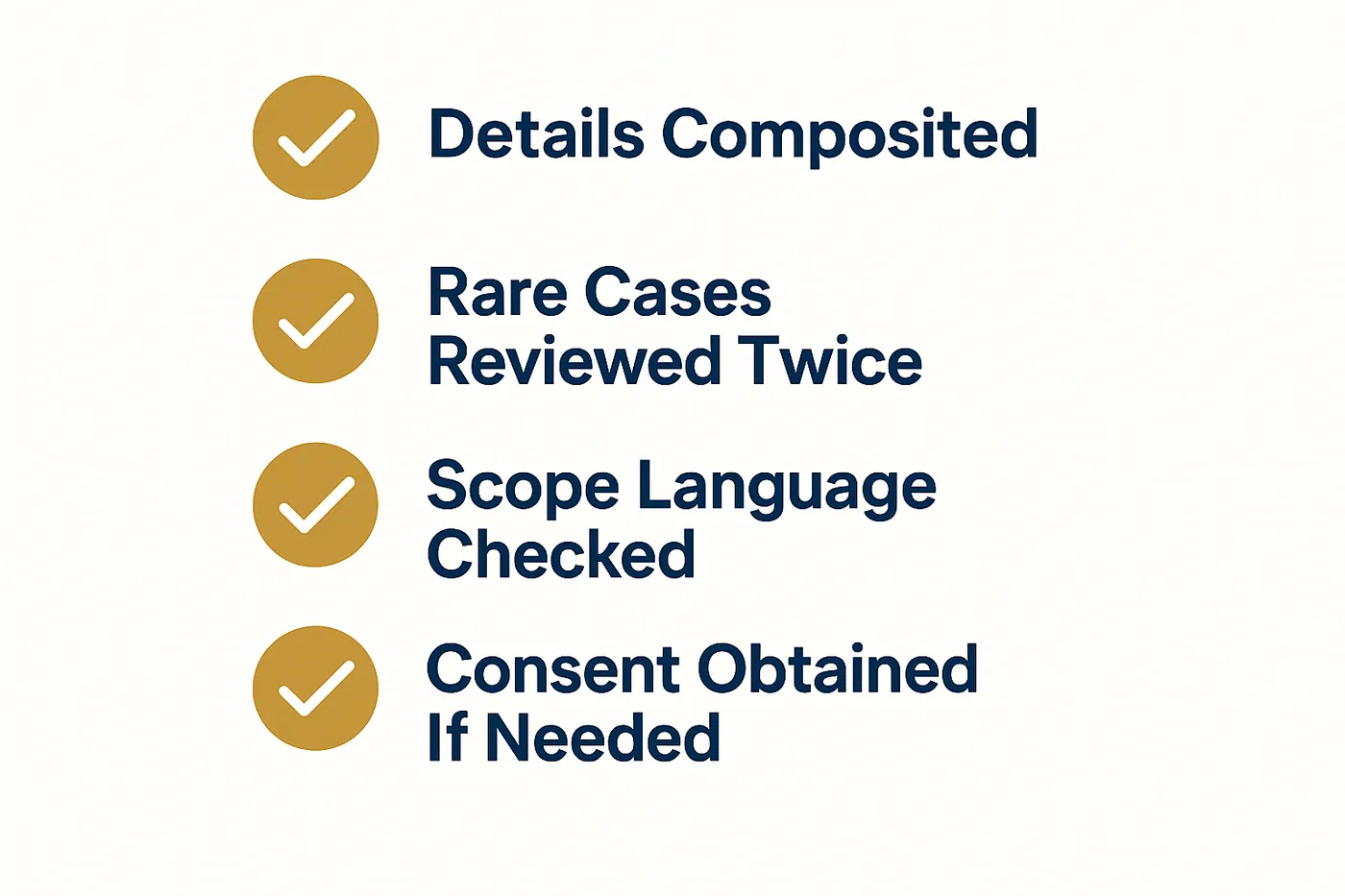
De-identification for a book needs to go further than the eighteen identifiers HIPAA lists for research data, because a book reaches a much wider audience than a chart ever will. A composite patient typically blends details from several real cases so no single patient, family member, or referring colleague could recognize themselves in it: the age gets shifted, the exact diagnosis timeline gets adjusted, the specific clinic or town gets removed, and any detail rare enough to be a fingerprint (an unusual occupation, a distinctive family situation, a rare disease combined with an identifiable location) gets changed or dropped entirely. A rare-disease case is worth flagging specifically, since a condition uncommon enough gets identifiable fast even without a name attached, simply because so few people in a given area could have it.
Claims discipline and scope-of-practice language get checked in editing too, on purpose, so nothing ships that you wouldn’t defend in front of a colleague. That means recommendations get framed as general information and patterns observed across many patients, not as specific medical advice to the individual reader, the same informational-versus-advice line that shows up in any professional’s book but carries extra weight in medicine specifically. You review every word before it goes anywhere, and nothing about that review is optional or skippable to hit a deadline faster.
Does writing a book run into hospital policy or board rules?
Separately from HIPAA, most employed physicians have an outside-activities or outside-publication policy buried somewhere in their employment agreement or medical staff bylaws, and it’s worth finding and reading before you start, not after a manuscript exists. Academic medical centers in particular often have specific rules about using patient encounters from your employment for outside publications, sometimes requiring institutional review even for de-identified material. This varies enough by employer and specialty board that no general article can tell you your specific requirements; that’s a conversation for your own compliance office, department chair, or specialty board directly.
State medical boards generally focus their scrutiny on advertising claims and scope-of-practice statements rather than the fact that a physician wrote a book, which mirrors how bar advertising rules work for attorneys. A book that shares patterns and general education, avoids guaranteeing outcomes, and doesn’t claim a board certification or specialization you don’t actually hold is on safer ground almost everywhere than one that promises specific results. Malpractice carriers are worth a direct call as well, since some policies address media and publishing activity explicitly and the answer varies by carrier; that’s a question for your broker, not a general assumption either way.
The practical picture also differs by employment setting. A physician in solo or small-group private practice usually has the most direct path, since there’s no larger institution’s brand attached to the book and often no outside-publication policy to locate at all, though the state board and malpractice questions still apply in full. An employed physician at a hospital system or academic center typically has an actual written policy to find, sitting in an employee handbook, a medical staff bylaws document, or an academic appointment letter, and it’s worth asking human resources or a department administrator directly for it rather than assuming none exists simply because nobody has mentioned one. A physician in a large multi-specialty group sits somewhere in between, often with a lighter-weight internal sign-off than an academic center but still worth a direct question to a practice manager or managing partner before a launch date goes public.
Won’t I sound like every other doctor’s book on the shelf?
This is the most common fear we hear from physicians specifically, and it’s a reasonable one. The positioning stage exists to prevent it. Before a word gets drafted, the work decides who the one reader is, what the one promise is, and what makes this book different from the hundred adjacent ones. A precise book for one kind of patient or one kind of colleague usually outperforms a vague book aimed at everyone.
What if my specialty feels too narrow to fill a book?
Narrow is often the advantage, not the limitation. A cardiologist writing for newly diagnosed patients, or a hospitalist writing for exhausted night-shift colleagues, has a sharper promise than a generalist trying to cover everything. Positioning turns “too narrow” into “exactly who needs this.”
Does the type of medical book change the process?
Somewhat, and it’s worth naming the categories separately since the compliance weight and the writing approach shift by type more than most physicians expect going in.
- Patient-education books (understanding a diagnosis, preparing for a procedure, managing a chronic condition) usually carry the highest volume of patient-story material, which makes the de-identification pass the single most important stage, but they carry lower advertising-rule exposure since they’re clearly educational in framing.
- Physician-to-physician or clinical-practice books (a treatment approach, a diagnostic framework, a specialty-specific method) lean less on individual patient narratives and more on clinical patterns and evidence, which lowers privacy exposure but raises the bar on citing current guidelines accurately and clearly separating your own approach from established standard of care.
- Career memoirs and reflections on medicine (a physician’s path through training, a specific era of practice, a public health crisis) carry the highest privacy exposure of any category, since the entire premise is real experience, which makes composite work and, in some cases, direct patient consent the central editorial task.
- Health system or medical leadership books (running a practice, leading a department, healthcare administration) usually carry lower patient-privacy exposure but higher institutional exposure, since the book may describe an employer’s operations, culture, or decisions, which often needs its own sign-off conversation separate from the clinical-content review.
Being honest about which of these your book actually is, early, shapes which reviews matter most and which stage of the process needs the most time.
What if you’re not the only stakeholder in the book?
A meaningful share of physician-authors aren’t writing entirely on their own behalf. A department head writing under a hospital system’s name, a group practice writing a book meant to represent the whole practice rather than one physician, or two colleagues co-authoring together all add a layer that a solo private-practice physician doesn’t have to think about as much.
The practical fix is naming the approval chain before the manuscript exists, not after it’s finished and a launch date is already circulating. If a hospital system’s communications or legal team needs to review the manuscript, find out how long that review typically takes and build it into the timeline rather than discovering the delay two weeks before a planned launch. If a co-author is involved, agree upfront on who has final say over disputed edits, since two physicians reviewing the same chapter can reasonably disagree about a clinical framing choice, and having no agreed tiebreaker is what turns a small disagreement into a stalled project. None of this is unique to medicine. It’s the same stakeholder-management problem any professional book with more than one interested party runs into, just worth naming specifically here since so many physician-authors write under an institution’s name rather than only their own.
What happens if a privacy concern or complaint gets raised anyway?
A patient, a colleague, or a hospital compliance office can raise a concern about a published book for all kinds of reasons, including a mistaken belief that a composite story is actually about them. That’s not a reason to avoid writing about your clinical experience. It’s a reason to have a real, documented review process behind the book before it goes to print.
Having an actual record, which stories were reviewed for de-identification and when, what changes were made and why, whether a rare-condition case got the extra scrutiny it needed, whether hospital or board policy was checked, turns “we were careful” into “here’s exactly what we checked and when.” That documentation doesn’t guarantee a concern never gets raised. It’s the difference between responding to one with a clear paper trail showing genuine care was taken, versus responding to one from memory months or years after publication, which matters considerably if a hospital compliance office or state board ever actually asks.
Two hypothetical physician-authors, two different paths
These aren’t real clients. They’re illustrations of how the same process fits two very different clinical schedules and starting points, since that’s usually what shapes a physician’s specific plan more than specialty does.
Dr. A is a cardiologist who has given the same patient-education talk at community health fairs for years and already has slide decks, handouts, and a rough sense of the chapters. Her positioning stage moves quickly because she already knows her reader from years of talking directly to newly diagnosed patients and their families. Her extraction sessions lean on reshaping existing material rather than creating it from nothing, and she prefers early-morning sessions before her clinic day starts.
Dr. B is an emergency medicine physician with two decades of experience but nothing written down anywhere, not even notes. His schedule runs on rotating shifts rather than a predictable weekday pattern, so his sessions get scheduled around his shift calendar instead of a fixed weekly slot, sometimes the morning after a night shift when the details are still vivid. His manuscript stage takes a bit longer since every chapter starts from a conversation rather than an existing outline, and that’s a normal function of starting material, not a sign the process fits him any less well.
Same structure, same stages, genuinely different calendars and starting points, which is exactly why a real intake conversation about your specific schedule and specialty matters more than a generic timeline. Neither path is the “right” way to do this. They’re just two honest starting points, and knowing which one describes you before sessions begin is what keeps the schedule realistic instead of borrowed from someone else’s practice and someone else’s calendar.
What if you already write case reports, CME material, or lectures?
Many physicians already have a body of academic or educational writing sitting somewhere: case reports, CME slide decks, grand rounds presentations, patient handouts. That material is often the fastest path into a manuscript, since a meaningful share of the thinking has already been organized once.
It still needs the same review applied specifically for a book audience, not assumed to already meet the bar because it cleared an institutional review once before. A case report written for a journal audience of other physicians follows different norms than a book written for patients or the general public; medical shorthand needs translating, and a de-identification standard that satisfied a journal’s editorial board years ago may not hold up against the wider, less predictable readership a published book reaches. Treat existing academic material as source content to mine for structure and insight, not a finished draft to copy in directly. The same composite check, scope review, and disclaimer pass described above apply to it exactly the way they’d apply to a chapter built from scratch in a new extraction session.
What does the manuscript stage actually look like week to week?
Concretely, most physician-authors move through extraction in a repeating rhythm rather than one long unstructured project: a scheduled session (30 to 60 minutes, in person or by phone), a written draft of that material delivered back within roughly a week, a review pass where the physician reads it, corrects anything clinically or personally inaccurate, and flags any patient story that needs more de-identification work, then the next session builds on what came before. Over 8 to 16 weeks, depending on book length, that rhythm produces a full manuscript without ever requiring a block of time longer than a single session.
The part that surprises most physician-authors isn’t the writing. It’s how much of what they already know comes out easily once someone is asking the right questions in the right order, the same way a good case presentation flows once you know what the audience actually needs to hear. By the time the last session wraps, most physicians are surprised at how little of the manuscript came from staring at a blank document alone, and how much of it came from conversations they were already good at having.
What does the book actually do for a practicing doctor?
Referrals that arrive already convinced, speaking invitations, media quotes, and a practice brand that goes beyond the insurance directory listing. It’s also the door to courses, consulting, and programs that a medical license alone doesn’t open on its own. For most physician-authors, the book isn’t the income. It’s the instrument that opens the rooms where the income happens.
In our intake data, physicians consistently name the same two blockers before anything else: no time, and fear of sounding like every other doctor’s book. Both are solvable with structure, not with quitting your job, which is exactly why neither shows up as a real reason to wait once the process starts. A third blocker shows up almost as often, quieter than the first two: not knowing whether writing about patients is even allowed. That one is solvable too, with the same upfront checks described above, and it tends to resolve faster than physicians expect once someone actually asks the questions instead of assuming the answer is no.
[TESTIMONIAL: pending permission: physician/nurse author]
Questions to ask before you publish
Whether you’re working with us or building this on your own, these are worth having clear answers to before a manuscript goes anywhere near a printer.
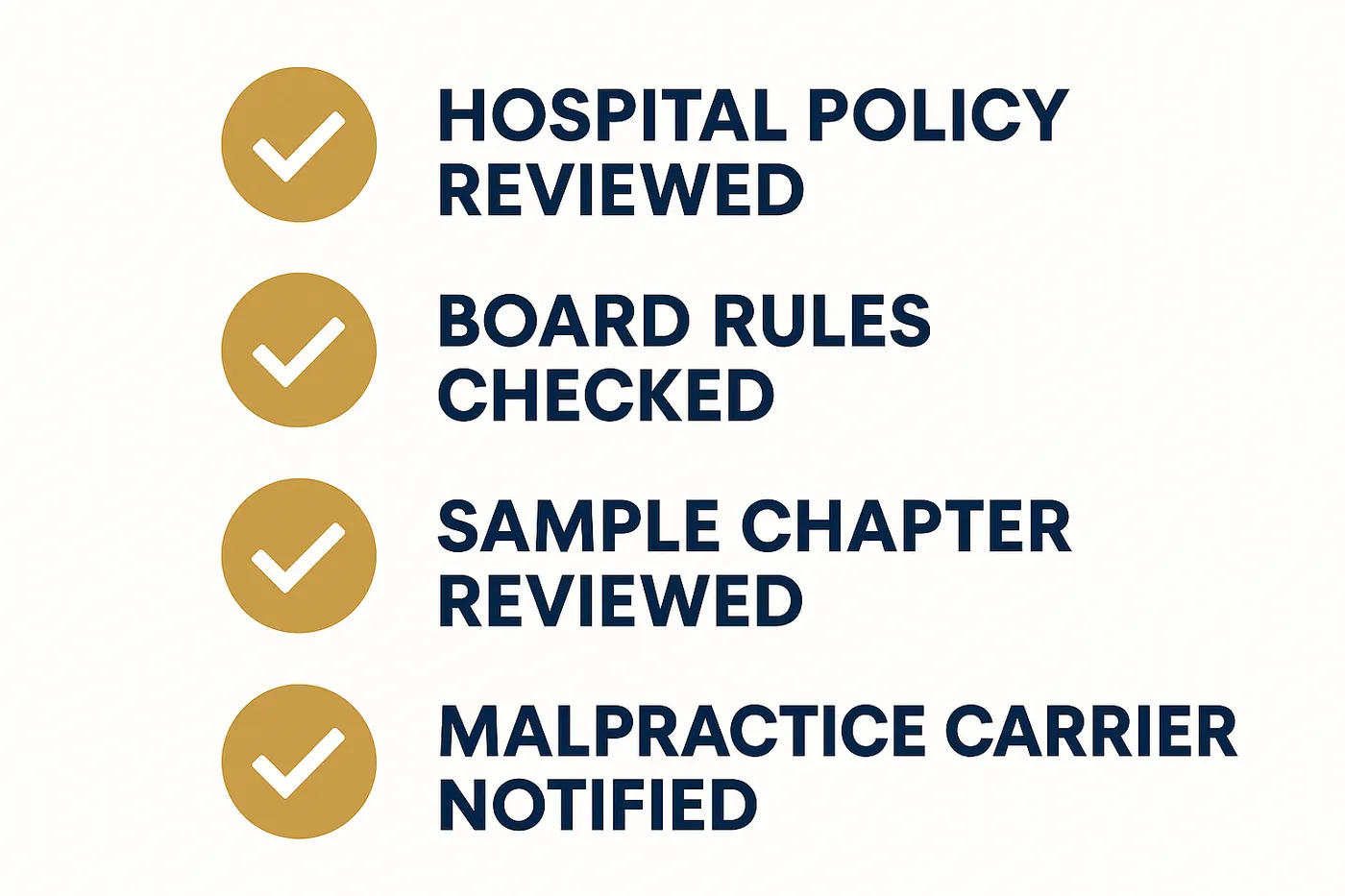
Have you found and read your employer’s outside-publication or media policy, if one exists, rather than assuming a book falls outside it? Have you checked your specialty board’s rules on advertising and specialization claims? Has at least one sample chapter, ideally one that includes a patient story, been reviewed by someone other than you specifically for de-identification, not just for prose quality? Have you had the malpractice-and-publishing conversation with your carrier or broker directly? If any of these don’t have a clear answer yet, that’s useful information now, while it’s still cheap to resolve, not after the book is printed and the launch date is public.
Is this the right time for you specifically?
Readiness for a physician usually comes down to two things that have nothing to do with writing ability: whether your schedule has any repeatable rhythm at all to build sessions around, even an irregular one like rotating shifts, and whether your employment situation is stable enough that a policy check is realistic right now rather than mid-transition between roles. If you’re in the middle of a credentialing move, a new employment contract negotiation, or genuinely unsure whether your current role allows outside publication, it’s worth resolving that first, not because the book is a bad idea, but because starting sessions before you know the answer usually means pausing partway through.
If those two things are settled, the compliance work described above isn’t a reason to wait. It runs alongside the writing, the same way chart documentation runs alongside patient care rather than blocking it. What tends to separate physicians who finish from physicians who circle the idea for years isn’t more free time eventually showing up. It’s deciding to start the structured process now, with the calendar they actually have, instead of waiting for a quieter season of medicine that, for most practicing physicians, never quite arrives on its own.
If you want the full profession-specific breakdown, including the books doctors write most often, see How Does a Doctor Write and Publish a Book (Without Quitting Medicine)?. For the honest cost range behind this process, read how much hybrid publishing costs, or book a strategy call to talk through your specific specialty and schedule.