Short answer: if your book is meant to open doors, not just sell copies, LinkedIn is where that actually happens. For the consultants, executives, and coaches we work with, where you talk about the book matters as much as writing it, and the 2026 data backs up why.
Key takeaways
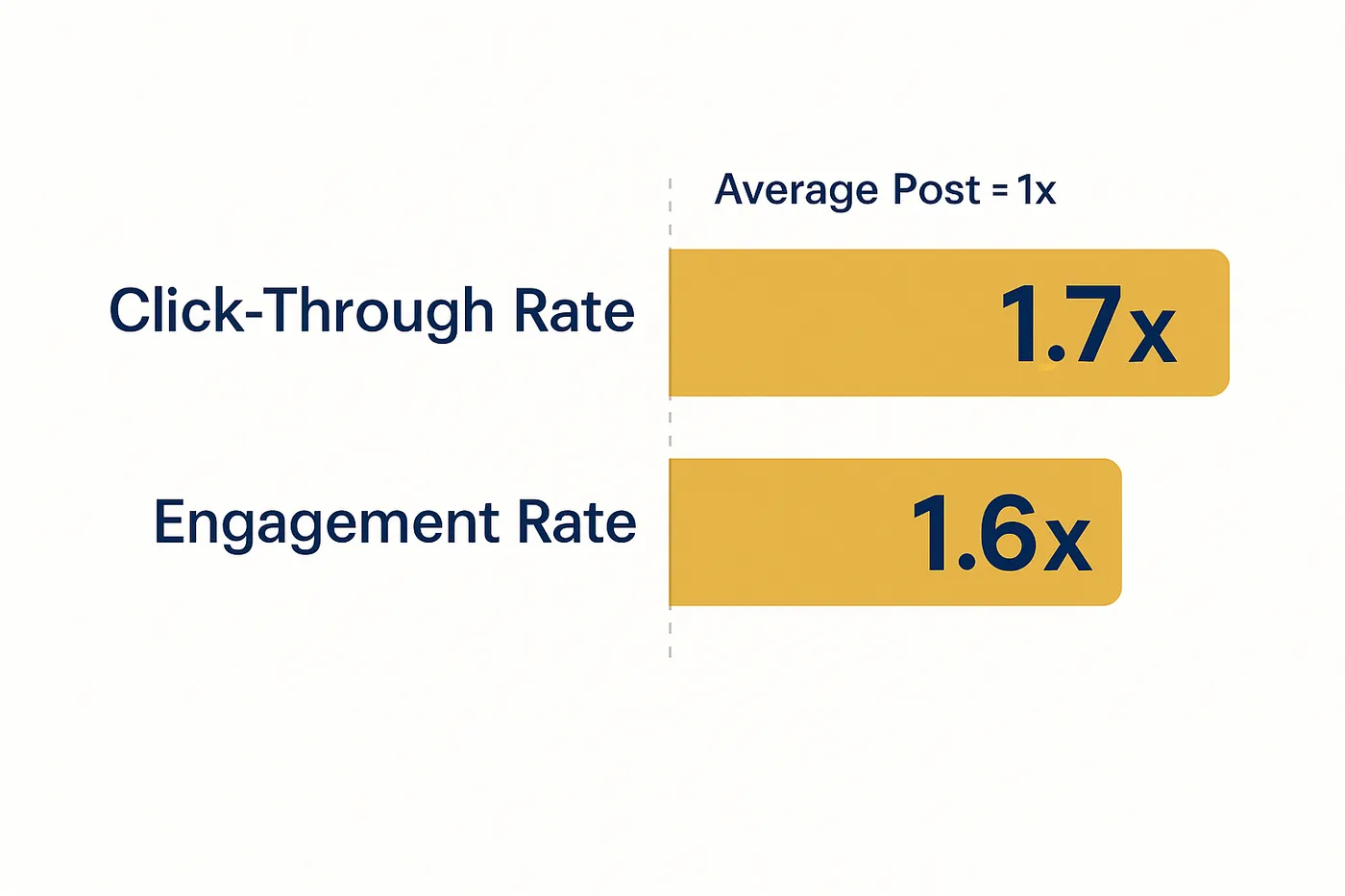
- Thought leadership content on LinkedIn earns a 1.7x higher click-through rate and 1.6x higher engagement rate than the average post on the platform.
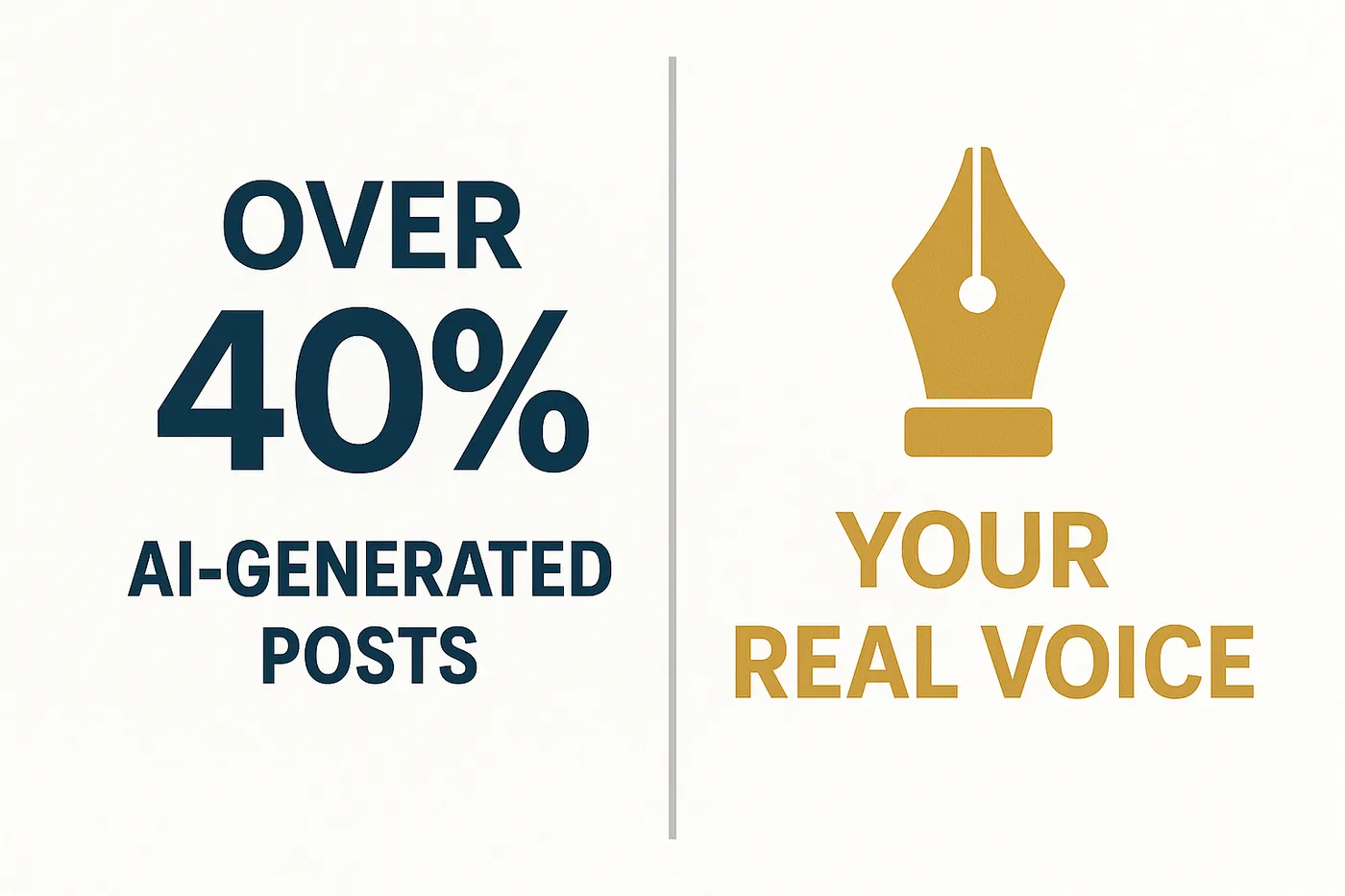
- Over 40% of long-form LinkedIn posts are now AI-generated, which makes a real voice stand out more, not less.
- The book and the platform build each other: post the book's ideas while you're still writing it, not after it ships.
- A book-to-post pipeline turns manuscript material into a year of content without starting from scratch each week.
- The goal isn't followers. It's the specific reader who books a call, invites you to speak, or hires you because of what they read.
The numbers behind the platform choice
Thought leadership content on LinkedIn earns a 1.7x higher click-through rate and 1.6x higher engagement rate than the average post on the platform. That’s not a small edge. It means the exact kind of content a nonfiction book is built from, a real position, a real reframe, a real case, performs better on LinkedIn than almost anything else you could post there.
Other platforms simply don’t have the same audience for this kind of content. Instagram and TikTok reward visual storytelling and short-form entertainment, which works for plenty of brands but rarely for a nonfiction argument that takes more than fifteen seconds to land. LinkedIn is built around exactly the format a book’s ideas actually need: enough space for a real point, in front of an audience that’s there in a professional mindset, already primed to take a business book seriously.
That professional mindset matters more than it might seem. Someone scrolling LinkedIn on a weekday afternoon is thinking about their career, their business, or a problem at work, which is precisely the headspace a business, leadership, or professional-skills book is trying to reach. The same idea posted to a platform where people are thinking about vacation photos or entertainment competes for attention against a completely different set of intentions, and usually loses.
Where this fits for a book that isn’t purely business
Not every book from our authors is a straightforward business title, and the logic still mostly holds even for memoir, health, or personal-development books, as long as the author’s professional identity is part of what makes the book credible. A therapist writing about a personal experience with burnout, for example, still benefits from LinkedIn, because the platform’s audience includes exactly the professional peers and referral sources who’d trust that perspective most. The fit gets weaker only when the book has nothing to do with the author’s professional life at all, in which case a different platform, matched to that book’s actual reader, is worth considering instead. Most of the nonfiction we work on doesn’t fall into that category.
Why this matters more, not less, with AI everywhere
Here’s the part that should change how you write your posts, not just where you post them. An independent analysis of over a million posts by the AI-detection firm Pangram Labs found that more than 40% of long-form LinkedIn posts were flagged as fully AI-generated as of mid-2026, making LinkedIn the most AI-saturated of the major platforms studied. That means most of what your audience scrolls past already sounds the same.
A post built from a real book, in your real voice, with a detail only you could know, stands out precisely because it doesn’t read like everyone else’s. This is the same principle covered in our guide on whether to use AI to write your book: the specific story, the specific client, the specific mistake you learned from, is what a generic AI-assisted post can’t produce, and it’s exactly what an oversaturated feed makes more valuable, not less.
How often should you actually post
There’s no universal number, but a workable range for most of the authors we work with is two to four posts a week during the writing and pre-launch period. That’s frequent enough to build a real following before launch day, without turning into a second full-time job on top of finishing the manuscript.
Consistency matters more than volume. A steady two posts a week for six months outperforms a burst of daily posting for two weeks followed by silence, because the algorithm and the audience both reward a presence they can rely on, not a spike. Readers who follow a consistent voice start to anticipate the next post the way they’d anticipate the next chapter of a book they’re enjoying, and that anticipation is worth more than any single viral moment. If you have to choose between more posts and better posts, choose better. One post built around a real, specific detail outperforms three built around generic advice, every time.
Doesn’t this take time away from writing the book?
It’s a fair concern, and the honest answer is that it takes some time, but usually less than authors expect once the system is in place. The heaviest lift is the writing session itself, the work you’re already doing to develop the manuscript. Turning one of that session’s ideas into a post is a much smaller task: fifteen to twenty minutes to write a version of something you’ve already thought through in depth.
The authors who find this sustainable treat posting as a byproduct of the writing process, not a separate project competing with it for time. The ones who struggle usually try to run two unrelated content operations at once, one for the book and a completely different one for LinkedIn, which really is twice the work. Keep them as one pipeline, and the time cost drops considerably.
Does the format matter: text, video, or newsletters?
Text posts remain the core format for this kind of content, and they’re the lowest-effort way to turn a writing session into a post. But two other LinkedIn formats are worth knowing about as the book gets closer to launch.
Native video tends to perform well for material that benefits from tone and delivery, like a short answer to a question you get asked constantly, recorded straight to camera. It’s a heavier lift per post than text, so it’s worth reserving for your strongest material rather than trying to do it every week.
LinkedIn newsletters work well for authors who want a more structured, recurring presence. A monthly or biweekly newsletter built from the book’s chapters as they’re finished gives readers a reason to subscribe rather than depend on the feed algorithm to see each individual post, and it becomes a direct line to your most engaged readers by the time the book launches.
None of these formats replace the others. A simple system, mostly text posts with an occasional video and a periodic newsletter, covers most of what a launch actually needs without requiring you to become a full-time content creator on top of writing a book.
Using the book and the platform to build each other
The mistake we see most often: authors treat the book and the platform as two separate projects, writing the manuscript in isolation and only thinking about LinkedIn once it’s published. Don’t wait. The ideas you’re extracting in your writing sessions are LinkedIn posts in their earliest form. Post them as you go, and the following that grows alongside the manuscript becomes the audience already primed to buy the book, book you to speak, or hire you, the moment it launches.
This works because the two feed each other in both directions. Writing the book forces you to sharpen an idea enough to put it in a chapter, which makes it a better post than something dashed off from scratch. And posting the idea before the book ships gives you a live read on which parts of your material actually land with real people, before you’ve locked the manuscript.
Turning manuscript material into a year of posts
You don’t need a separate content strategy. The book itself is the content strategy, broken into smaller pieces. A practical way to think about it:
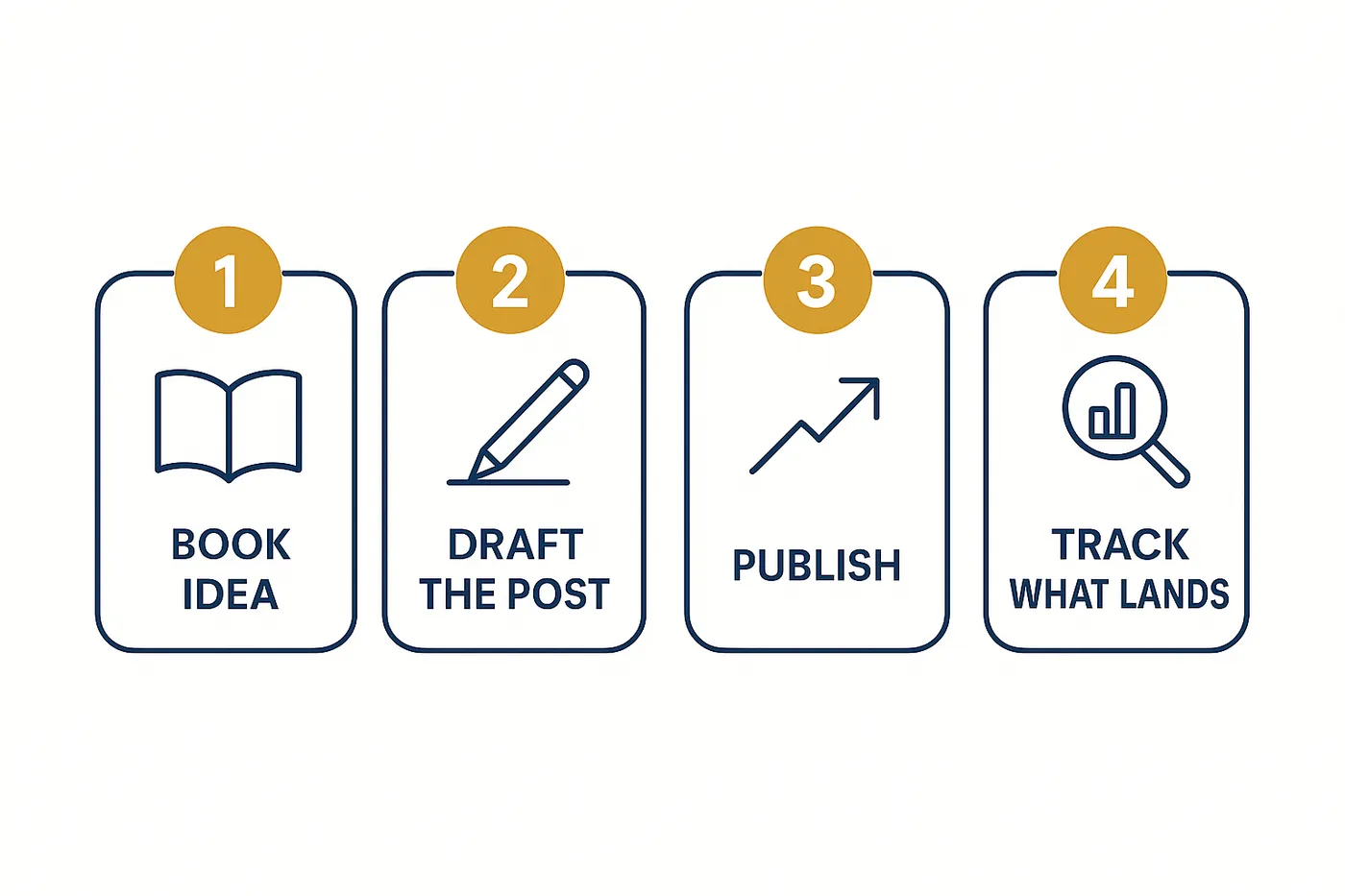
Every chapter usually contains three to five ideas dense enough to stand alone as a post: a reframe, a client story (with permission and identifying details changed as needed), a mistake you see constantly, or a one-line answer to a question you get asked all the time. Pull one out, write it the way you’d explain it to a colleague over coffee, and publish it. Watching which of these actually land, more comments, more direct messages, more “can we talk about this” replies, tells you which parts of the book are your strongest material well before publication day.
What a post built this way actually looks like
The posts that work aren’t the ones optimized for a formula. They’re the ones that sound like an actual person explaining something they’ve thought about for years. A few things the strongest posts from our authors tend to share:
One idea, not a summary. A post trying to cover an entire chapter reads like a table of contents. A post built around one specific reframe or one specific moment reads like something worth stopping to read.
A real detail, not a general claim. “Many clients struggle with this” is forgettable. The specific Tuesday, the specific thing a client said, the specific number from your own work, is what a reader remembers and what no AI-assisted post pulled from nowhere can supply.
A clear point of view. The posts that actually build authority take a position, even a mildly contrarian one, instead of hedging every sentence. Readers trust someone who’s willing to say what they actually think.
An ending that invites a response, not a hard sell. A question, an invitation to disagree, or simply stopping when the point is made tends to outperform a post that pivots into a pitch in the last line.
What this looks like across different professions
The shape of a LinkedIn strategy shifts by profession, even though the underlying mechanism doesn’t.
Doctors and clinicians tend to get the most traction from posts that translate clinical experience into plain language a patient or a fellow provider can actually use, one specific case pattern at a time (with all identifying details removed or changed well beyond what’s clinically necessary). Our guide for doctors covers how this fits the broader positioning question.
Lawyers often do well with posts that answer the specific question clients ask right before they decide to hire someone, rather than general legal commentary on the news. A post that clearly explains one recurring point of confusion in your practice area does more for credibility than a reaction to whatever legal story is trending that week. Our guide for lawyers goes deeper on this positioning.
Coaches and consultants tend to perform best with posts built around a specific transformation: the before, the intervention, the after, told as a real (permissioned, detail-changed) story rather than a general principle. Our guide for coaches covers the positioning work this connects to.
Across all three, and every profession in between, the pattern holds: specific beats general, every time, on every platform, but especially on one where a large share of what a reader scrolls past no longer bothers to be specific at all.
What happens to this after the book launches
The posting habit doesn’t end on launch day, even though a lot of authors treat it that way. The months after publication are when speaking invitations, media requests, and client inquiries actually start arriving in volume, often in response to something you posted weeks or months earlier that’s still being read, shared, or discovered by someone new to your page.
Authors who keep posting after launch, using post-launch material like reader questions, speaking Q&A moments, and new client work as fresh content, tend to see the book’s reach compound for years rather than spike once and fade. This is the same logic behind treating the book as an asset rather than an event: the platform is where that asset keeps working long after the launch sequence itself is over.
What not to post
A few guardrails matter as much as the content itself. Never share a client’s story, identity, or specific details without their explicit permission, and change enough identifying detail that they can’t be recognized even with permission, unless they’ve asked to be named. Never turn a real result into an implied promise: any post referencing income, client outcomes, or results should carry the same context our disclaimer states, that these are individual results and not a guarantee of anyone else’s. And avoid posting half-finished thinking framed as certainty. It’s fine to think out loud, but say so, rather than presenting an untested idea as settled fact.
Two hypothetical authors, two different platforms strategies
These aren’t real clients. They’re illustrations of how the same platform produces very different results depending on how it’s used.
Author A started posting a version of her book’s central framework four months before the manuscript was finished, one idea a week, each one a real story from her consulting practice with client details changed. By launch day, she had a following that already understood her framework, three inbound speaking inquiries that referenced specific posts, and a launch list of people who wanted to buy the book the day it existed.
Author B waited until his book was printed to start posting, then posted generic summaries of each chapter in the week after launch. The posts read like ad copy for the book rather than like him, got minimal engagement, and did little to extend the launch beyond week one.
Same platform, same amount of writing, completely different outcome, because one treated LinkedIn as part of the book process and the other treated it as an afterthought.
How this actually turns into speaking invites and client conversations
The mechanism is simpler than it looks. A post that lands puts your specific thinking in front of people who weren’t actively searching for you, in a format that lets them judge, in under a minute, whether you actually know what you’re talking about. Someone who reads three or four posts that all demonstrate real, specific expertise arrives at a first conversation already convinced, which is a completely different sales conversation than starting from zero.
That’s also why the book and the platform have to say the same thing. A polished LinkedIn presence built on ideas the book doesn’t actually deliver on creates a credibility gap the moment someone reads both. The platform’s job is to prove, in small doses, exactly what the book proves at length.
A simple weekly system that doesn’t fall apart by month three
Most authors don’t quit posting because the strategy failed. They quit because the system required too much decision-making every single week, and decision fatigue wins eventually. A simpler system survives longer:
Right after each writing session, while the material is fresh, jot down the two or three ideas from that session that felt strongest, in a single running list. Don’t write the posts yet. Just flag them.
Once a week, at a set time, pick one flagged idea and write the post. Because you already know what you’re writing about, this step usually takes fifteen minutes instead of the hour it takes to stare at a blank compose box wondering what to say.
Track what happens after you post, not obsessively, but enough to notice which ideas get real engagement (comments and messages, not just likes) versus which land flat. That signal should quietly influence which parts of the manuscript get more attention, not just which posts you write next.
This system works because it never asks you to generate new material. It only asks you to notice what you already produced and package a piece of it once a week. That’s a sustainable habit. Starting from scratch every Monday morning is not.
Questions worth asking yourself before you start posting
A few honest checks before building a posting habit around the book:
- Am I drawing posts from material I’m actually writing, or am I inventing generic content unrelated to the book?
- Does every client story I’m considering have real permission, with details changed enough to protect their privacy?
- Am I taking an actual position, or hedging every sentence so much that the post says nothing?
- Would this post sound like me if someone read it out loud, or could it have come from any account in my industry?
If the honest answer to the last one is “any account,” that post needs a specific detail only you have before it goes out.
Where this fits in the actual process
This isn’t a separate workstream bolted onto book writing. It’s part of why positioning comes first, covered in our guide to where to start: the one reader and one promise you decide on before writing a word is the same positioning that makes your LinkedIn presence sharper. If speaking and brand-building are the real goal behind the book, Author Brand & Speaking covers how the two get built together instead of in sequence.
None of this requires becoming a “LinkedIn person” in the way that phrase sometimes gets used, chasing viral formats or posting for its own sake. It requires treating the platform the way you’d treat any other serious extension of the book itself: built from real material, aimed at a specific reader, and sustained past the first few weeks of enthusiasm. That’s a much smaller ask than it sounds, and it’s the difference between a book that opens doors for a year and one that opens them for a week.